
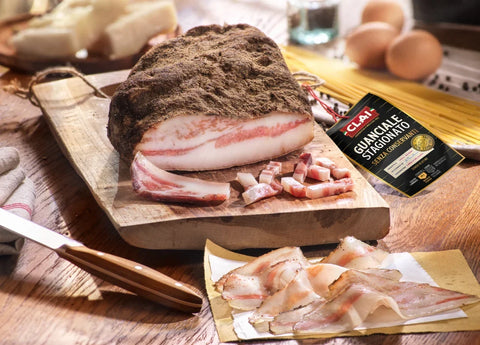
There is a moment in the kitchen when you realize that not all ingredients are created equal. It happens the first time you put guanciale in a pan without oil and watch it slowly melt, releasing a translucent fat and an aroma unlike anything else. It is not pancetta. It is not lard. It is something more refined, with a history and a reason for being that are worth knowing.
What is guanciale?
Guanciale is a cured meat made from the pork cheek, the cut that includes the animal's jaw and throat. The name comes from there: cheek. It is a rich cut, with a fat structure different from that of the belly or the back: more compact, streaked with fine lean meat, capable of melting evenly during cooking without becoming soft or stringy.
It is the quintessential meat of Roman cuisine: carbonara, amatriciana, and gricia would not exist without it. But its presence extends far beyond those boundaries, and anyone who has used it at least once tends not to go back.
Where does guanciale come from on the pig?
Pork guanciale comes from the animal's head, specifically from the cheek and throat. It is a cut that includes both meat and fat in well-balanced proportions: the fatty part is predominant and represents the heart of the product, while the lean meat is present in thin streaks that run through the entire slice.
This structure is what distinguishes guanciale from pancetta, which instead comes from the pig's belly. The fat of the cheek has a different composition: it is softer, with a lower melting point, and during cooking it melts gradually, releasing aroma and flavor without ever becoming rubbery. The dark rind of pepper and spices that covers the outside is an integral part of the product and contributes to the aroma during aging.
How is guanciale produced?
The production of guanciale follows precise steps, passed down through tradition and difficult to speed up without losing quality.
The selection of the raw material
Everything starts with the quality of the cheek. In the CLAI aged guanciale, the meats come exclusively from pigs born, raised, and slaughtered in Italy, supplied by the cooperative's member farmers. Over 70% of the meats processed by CLAI come from member farms integrated into the supply chain, located in the regions of the Po Valley. A control that begins long before the deli.
Salting and seasoning
Each guanciale is trimmed by hand and prepared individually. Salting takes place in vats with a few natural ingredients: sea salt, red garlic, bay leaves, and cloves. No chemical preservatives, no artificial aromas. After about a week, the guanciale is massaged by hand with freshly ground black peppercorns, which form that dark and fragrant crust visible on the outside. The red garlic pulp is blended at the time, as is the black pepper: fresh ingredients, processed just before being applied.
Aging
The guanciale is hung and left to age slowly for at least 90 days, an aging period above the market average. The long time allows the fat to concentrate in flavor, the meat to dry without hardening, and the aromas to penetrate deeply. The fragrance that rises when cutting a well-aged guanciale is the result of those three months of waiting.

Guanciale and pancetta: the differences that matter
The question often arises, especially among those who did not grow up with Roman cuisine: can guanciale be replaced with pancetta? Technically, yes. In the result, no.
- The cut: guanciale comes from the cheek, pancetta from the belly. The fat structure, lean proportions, and water percentage are different.
- The flavor: guanciale has a more intense flavor, with more complex notes linked to the long aging and seasoning with pepper and spices. Pancetta is more delicate, often smoked.
- The behavior in the pan: guanciale melts gradually and evenly, releasing aromatic fat without burning. Pancetta, having less fat, tends to brown more quickly and dry out.
- The aging: guanciale generally has a longer aging period, which concentrates and intensifies the flavors.
In traditional Roman recipes, the distinction is clear. For everything else, the choice depends on the dish and personal taste.
How to use guanciale in cooking
The most common way is to cut it into strips or cubes and brown it in a pan without adding oil or butter: it releases its own fat, which becomes the aromatic base of the dish. The heat must be medium-low at the beginning, to allow the fat to melt gradually. When the strips become translucent and slightly golden, the guanciale is ready.
The applications in the kitchen go far beyond the three Roman pasta dishes:
- As a base for sauces and soffritto
- On bruschetta and crostini, paired with honey or figs
- Wrapped around vegetables before baking in the oven
- On focaccia and rustic pizzas
- Thinly sliced and served raw on a cutting board, next to aged cheeses
A note on the rind: added to sauces, soups, or legumes during slow cooking, it releases flavor without falling apart. Do not throw it away.
On the blog you will find some concrete ideas for using it:
- Guanciale and carbonara: the details that make the difference
- Pasta with zucchini and guanciale
- Pasta with pumpkin and guanciale
- All recipes with guanciale
How to choose a good guanciale
When evaluating a guanciale, there are some concrete indicators. The color of the fat must be white or slightly pink, not gray or yellowish. The pepper rind must be present and compact, not damp or sticky. When cut, the aroma must be intense but clean, without acidic notes. The structure must be compact but yielding.
Reading the label helps: the ingredients must be few and recognizable. Salt, pepper, garlic, natural spices. The presence of preservatives is not necessary in a well-made guanciale: natural aging already performs a preserving function.

How to store guanciale at home
The whole guanciale is stored in the refrigerator wrapped in breathable food wrap or in a cotton cloth. Once opened, it is best to cut it into portions, keep one in the refrigerator and vacuum-seal the rest: the flavor remains intact for weeks. Do not freeze the whole guanciale: the freeze-thaw cycle alters the fat structure and compromises consistency and aroma. The already portioned vacuum-sealed slice solves the problem from the start.
CLAI aged guanciale: whole or slice
CLAI aged guanciale is available in two versions, both orderable online with refrigerated shipping throughout Italy.
- Whole aged guanciale (about 2 kg): for those who want to slice it as they like, regulate the thickness, and use the rind in cooking as well. The choice of those who use it often and in large quantities.
- Vacuum-sealed guanciale slice (about 300 g): practical, already portioned, ready to use. Ideal for those who want to always have it at hand without waste.
Both are made with 100% Italian meat from the CLAI supply chain, without preservatives, gluten-free, aged for at least 90 days.
Discover CLAI Guanciale in the shop


